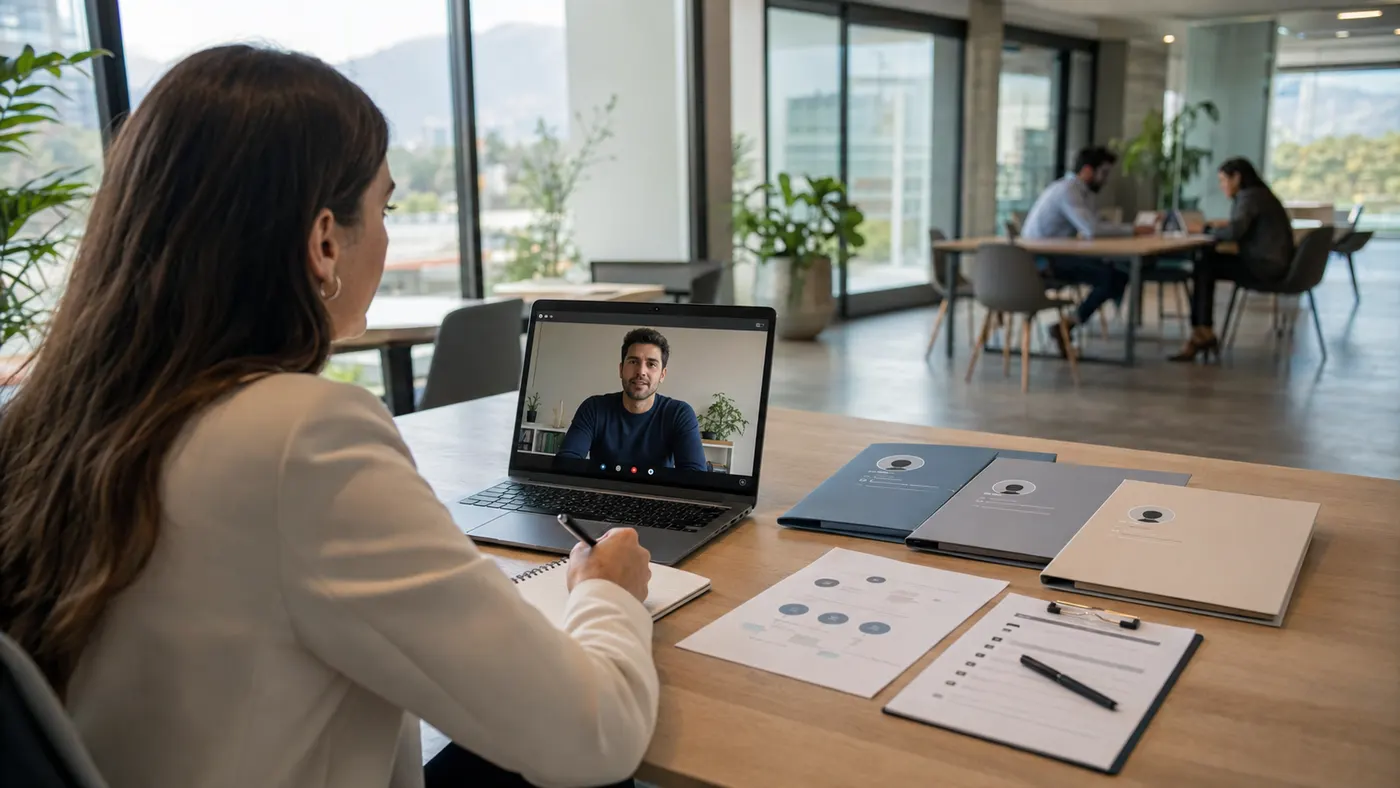
Human resources working from home is practical for many recruiting, onboarding, HR operations, payroll, benefits, learning, employee support, analytics, and management responsibilities. Interviews can happen by video, documents can move through secure systems, policies can be maintained collaboratively, and employees can receive support through scheduled and on-demand channels.
That does not mean every HR task becomes location-independent. Employment rules, payroll, benefits, employee relations, investigations, safety, and data privacy depend on jurisdiction and organizational context. Some situations also benefit from an on-site representative or local specialist.
This guide explains which HR roles can work remotely, how their tasks translate to a distributed workflow, which responsibilities may require local coordination, and what companies should prepare before hiring remote HR support.
Quick Answer: Yes, many human resources roles can work from home. Remote-friendly positions include recruiting coordinator, recruiter, HR assistant or coordinator, onboarding specialist, HRIS specialist, payroll specialist, compensation and benefits specialist, learning and development specialist, employee relations specialist, HR generalist, and HR manager. Success depends on secure systems, documented workflows, clear decision rights, reliable communication, jurisdiction-specific expertise, and an escalation plan for sensitive or location-dependent issues. Remote HR professionals can execute and coordinate the work, but authorized company leaders and qualified legal, tax, payroll, or benefits experts should retain decisions that require formal authority or local expertise.
Can Human Resources Really Work From Home?
Much of modern HR is information, communication, process, and decision support. Recruiting teams manage applicant pipelines, onboarding teams coordinate documents and access, HR operations teams maintain records, payroll teams verify inputs, and learning professionals deliver virtual programs. These activities can be organized through secure cloud systems and scheduled collaboration.
The U.S. Bureau of Labor Statistics describes human resources specialists as professionals who recruit, screen, interview, and place applicants and who may also work with compensation, benefits, training, and employee relations. Many of those tasks have remote equivalents.
The deciding question is not whether HR as a whole can be remote. It is whether a specific responsibility has the necessary access, security, authority, documentation, communication channel, and local knowledge to be performed well from another location.
Which HR Tasks Work Well Remotely?
| HR Activity | Remote Workflow | Important Control |
|---|---|---|
| Recruiting | Job postings, sourcing, screening, scheduling, video interviews, and applicant communication | Consistent criteria, approved messages, and documented decisions |
| Onboarding | Document collection, orientation, checklists, access coordination, and early check-ins | Secure identity and document handling with clear owners |
| HR Operations | Records, letters, status changes, requests, reports, and workflow administration | Role-based access, audit history, and data accuracy |
| Payroll Support | Time-data collection, change verification, issue routing, and reconciliation support | Segregation of duties, approval controls, and jurisdiction expertise |
| Benefits Support | Enrollment communication, employee questions, vendor coordination, and records | Approved plan information and protected personal data |
| Learning and Development | Needs analysis, virtual sessions, learning content, enrollment, and evaluation | Accessible materials, facilitation quality, and outcome measurement |
| Employee Support | Office hours, case intake, policy questions, follow-up, and escalation | Confidential channels, response standards, and clear limits of authority |
| HR Analytics | Data validation, dashboards, trend analysis, and workforce reporting | Definitions, minimum access, privacy, and responsible interpretation |
Remote HR becomes more reliable when the company converts informal habits into explicit workflows. Each process should identify its trigger, required information, owner, approver, deadline, record location, communication standard, and escalation path.
11 Human Resources Roles That Can Work From Home
1. Recruiting Coordinator
A recruiting coordinator manages the logistics of hiring. Responsibilities may include publishing approved openings, scheduling interviews, communicating with candidates, maintaining applicant records, collecting feedback, organizing assessments, and monitoring process deadlines.
The role can work remotely when interview availability, message templates, ownership, service levels, and applicant tracking steps are clear. It is distinct from the recruiter, who usually carries more responsibility for sourcing, screening, and candidate evaluation.
2. Recruiter or Talent Acquisition Specialist
A recruiter translates a hiring need into a candidate search. The work may include intake with hiring managers, sourcing, screening, interview coordination, candidate communication, evaluation support, offer coordination, and pipeline reporting.
Remote recruiters need structured evaluation practices and a strong understanding of the roles they fill. Employers should distinguish sourcing activity from hiring quality and measure qualified slate quality, process speed, candidate experience, acceptance, and early retention rather than message volume alone.
3. HR Assistant or HR Coordinator
An HR assistant or coordinator supports recurring administrative processes. Tasks may include maintaining records, preparing approved letters, responding to routine requests, scheduling meetings, updating systems, tracking documents, supporting onboarding, and routing exceptions.
This role works well remotely when the company defines which requests can be completed independently and which require approval. Access should follow the minimum necessary standard because HR systems contain sensitive personal and employment information.
4. Onboarding Specialist
An onboarding specialist coordinates the transition from accepted offer to productive team member. Responsibilities may include document workflows, orientation, schedules, system-access requests, equipment coordination, introductions, training plans, policy acknowledgments, and early check-ins.
Remote onboarding should not become a sequence of forms without human connection. The specialist can coordinate the process, but managers must still explain priorities, provide feedback, and integrate the new team member. Talent Global’s first 30 days onboarding plan provides a practical structure.
5. HRIS Specialist
An HRIS specialist supports the human resources information system and related workflows. The role may configure fields and processes, manage permissions, validate data, prepare reports, troubleshoot issues, coordinate integrations, document changes, and support system users.
This is a strong remote role because the system is the primary work environment. It also carries significant risk. Permission management, change control, test environments, audit history, secure authentication, and separation of duties should be defined before access is granted.
6. Payroll Specialist
A payroll specialist collects and verifies payroll inputs, processes approved changes, reviews exceptions, reconciles records, responds to employee questions, and coordinates with finance, HR, managers, or payroll providers.
Payroll can be performed remotely, but accuracy, confidentiality, deadlines, approvals, and jurisdiction-specific knowledge are essential. The person entering changes should not automatically have unlimited authority to approve or release payments. Companies should establish controls appropriate to their size and risk.
7. Compensation and Benefits Specialist
A compensation and benefits specialist supports pay structures, job analysis, benefit programs, enrollment, employee communication, vendor coordination, benchmarking, and data analysis. The BLS explains that compensation, benefits, and job analysis specialists evaluate positions and administer wage and nonwage programs.
Remote work is practical when the specialist has secure access to approved data and qualified local support where required. Recommendations should be separated from final decisions, and employee communication should reflect the actual plan documents and applicable rules.
8. Learning and Development Specialist
A learning and development specialist identifies skill needs, designs materials, coordinates programs, facilitates sessions, manages enrollment, supports learning systems, and evaluates outcomes. The BLS notes that training and development specialists may create online learning modules and deliver programs through virtual or other formats.
Effective remote learning uses more than recorded presentations. It may combine live facilitation, self-guided materials, practice, manager reinforcement, peer interaction, accessible resources, and follow-up evidence that the new capability is being used.
9. Employee Relations Specialist
An employee relations specialist receives concerns, clarifies policies, documents cases, advises managers, coordinates investigations, supports conflict resolution, and helps the organization respond consistently.
Much of the work can happen remotely through secure conversations and case systems. Sensitive matters require careful authorization, confidentiality, neutral documentation, and jurisdiction-specific guidance. Some investigations or workplace situations may require on-site support or independent local expertise.
10. HR Generalist
An HR generalist supports several connected areas, such as recruiting, onboarding, records, policies, employee questions, performance cycles, benefits coordination, and offboarding. The title is common in smaller organizations where the workload does not justify a specialist for every function.
The role can be remote, but its scope must be realistic. A generalist should not be expected to replace legal counsel, payroll experts, benefits brokers, security teams, and executive decision-makers. Define where the professional executes, coordinates, recommends, or escalates.
11. HR Manager
An HR manager plans and coordinates the organization’s people operations. Depending on the company, the role may lead staffing, policies, employee relations, performance programs, compensation coordination, HR systems, compliance processes, and a team of specialists.
The BLS profile for human resources managers emphasizes planning, coordination, and direction of administrative functions. Remote managers need strong access to leadership, a reliable operating cadence, trusted local partners when necessary, and enough authority to act on the responsibilities they own.
Which HR Responsibilities May Need Local or On-Site Support?
A remote HR team can coordinate many of these activities, but location-dependent elements should be assigned deliberately.
- Physical workplace safety, facilities issues, and incidents that require an on-site response.
- Collection or inspection of original documents when applicable rules do not permit a fully remote process.
- Sensitive investigations that require physical evidence, site access, or in-person interviews.
- Local labor, payroll, tax, benefits, immigration, union, or licensing decisions requiring qualified jurisdiction-specific expertise.
- Equipment handoff, physical access credentials, or local orientation activities.
- High-stakes conversations where leadership decides that in-person support is appropriate for the employee and situation.
The answer is often a distributed model rather than a strict choice between remote and on-site HR. A remote professional can own the recurring workflow while a manager, office representative, vendor, or qualified adviser handles the local element.
What Skills Do Remote HR Professionals Need?
- Clear, calm, and audience-appropriate written and verbal communication.
- Confidentiality and sound judgment about what should be documented, shared, or escalated.
- Accurate records, deadlines, follow-up, and attention to process details.
- Comfort with HR systems, spreadsheets, video meetings, documentation, and secure collaboration.
- The ability to explain policies without inventing exceptions or making unauthorized commitments.
- Cultural awareness and respect for employees working across different locations and contexts.
- Process improvement skills that turn repeated questions and errors into better workflows.
- Knowledge appropriate to the role, industry, employee population, and jurisdictions involved.
How Companies Should Set Up Remote HR Work
Define authority before assigning tasks
Document which activities the professional can complete, which recommendations they may make, which decisions require approval, and which matters must be escalated immediately. This protects employees and prevents a remote HR professional from being asked to make decisions outside the role.
Use secure systems and minimum necessary access
Store employee data in approved systems rather than personal inboxes or informal chat threads. Use role-based permissions, multifactor authentication, documented access changes, and secure processes for identity, payroll, health, benefits, performance, and investigation records.
Create employee service standards
Tell employees where to ask questions, what information to include, when they can expect a response, and which issues have an urgent route. Remote HR should feel accessible without requiring one professional to remain available through every channel at all times.
Maintain qualified local expertise
A remote HR professional may coordinate information across locations, but employment, payroll, tax, benefits, and legal obligations should be reviewed by qualified experts for the relevant jurisdictions. This article provides operational guidance, not legal or tax advice.
Measure service and quality together
Useful measures may include response time, process completion, record accuracy, payroll exception rate, onboarding readiness, candidate communication, employee satisfaction with support, training completion, case aging, and recurring issue reduction. Speed should not reward careless handling of sensitive information.
How to Evaluate a Remote HR Candidate
Use structured scenarios tied to the actual role. Talent Global’s remote interview guide provides a consistent framework that can be adapted for HR.
- Present an incomplete employee request and ask what the candidate would clarify, document, and escalate.
- Ask the candidate to organize a sample onboarding workflow with owners and deadlines.
- Discuss a confidential-data scenario and evaluate access, storage, and communication judgment.
- Request an example of correcting an inaccurate record or resolving a process exception.
- Ask how the candidate distinguishes policy explanation from a decision requiring authority or specialist guidance.
- Evaluate written clarity through a realistic candidate or employee message.
Employers should define the HR function, employee population, jurisdictions, tools, schedule, access, decision rights, and success measures before recruiting. Talent Global’s pre-hiring checklist can help organize those inputs.
Frequently Asked Questions
Can human resources work from home?
Yes. Recruiting, onboarding, HR operations, payroll support, benefits coordination, learning, employee support, analytics, and management can all include remote roles. The exact arrangement depends on secure access, authority, communication, jurisdiction, and the need for local support.
What HR jobs can be done remotely?
Remote-friendly roles include recruiting coordinator, recruiter, HR assistant, HR coordinator, onboarding specialist, HRIS specialist, payroll specialist, compensation and benefits specialist, learning and development specialist, employee relations specialist, HR generalist, and HR manager.
Can an entry-level HR professional work from home?
Yes, especially in recruiting coordination, HR administration, onboarding support, records, scheduling, and employee-service workflows. Entry-level remote roles need clear procedures, supervision, access limits, examples, and an escalation path.
Can recruiters work from home?
Yes. Intake meetings, sourcing, screening, candidate communication, video interviews, applicant tracking, feedback coordination, and reporting can be completed remotely. Recruiters still need role knowledge, structured evaluation criteria, hiring-manager access, and clear location requirements.
Can payroll and benefits roles be remote?
Yes, when professionals use secure systems, defined approvals, accurate data, separation of duties, and qualified jurisdiction-specific guidance. Remote location does not reduce the need for confidentiality, deadlines, reconciliation, or regulatory expertise.
What tools do remote HR teams use?
Common categories include an HRIS, applicant tracking system, payroll and benefits platforms, learning system, case management, document and e-signature tools, secure file storage, project management, surveys, analytics, video meetings, and approved team communication.
Does remote HR need to work in the same time zone as employees?
Not always, but meaningful overlap is useful for interviews, employee questions, manager support, onboarding, payroll deadlines, and sensitive issues. Companies should define required coverage rather than assuming that remote means fully flexible hours.
Can a company outsource part of its HR function?
Yes. A company may use remote professionals for recruiting coordination, sourcing, onboarding administration, records, reporting, payroll support, employee-service workflows, or learning coordination. The company should retain clear ownership of policy, sensitive decisions, approvals, and specialist obligations.
How can Talent Global help a company hire remote HR support?
Talent Global helps U.S. businesses define the role, source and evaluate candidates mainly from Latin America, present selected professionals for interviews, support onboarding documentation, and simplify billing. The client interviews, chooses, and directly manages the remote professional.
Add Reliable Remote Support to Your HR Workflows
Need help with recruiting, onboarding, HR administration, payroll support, employee-service workflows, or another people-operations function? Talent Global helps U.S. businesses define the role and interview vetted remote professionals from Latin America.